Read more Far from clichés, far from taboos, the first conference dedicated to transidentity in Corsica took place last April in Ajaccio, on the occasion of the third edition of the Sexual Health Weeks organized by the ARS and its partners. Around health professionals, key witnesses and association representatives, the word circulated freely, smoothly, to better understand and support this life journey. By Caroline Ettori This is the starting signal that many were waiting for. On April 12 at the Campo dell'Oro hotel in Ajaccio, transidentity, or rather transidentities as the nuances are specific to each person, were at the heart of a major reflection. A synergy that made it possible to inform, share experiences and consider improving support for those concerned. A first that began, as it should, with a work of deconstruction. Getting rid of the preconceptions, the representations that we all carry, sometimes without even knowing it or wanting to. Kevin Guigou, prevention officer at Enipse Paca Est, opened the event by recalling basic notions, good advice and major principles marking the journey of a transgender person: from initial questions to social, administrative and medical transition, including coming out. In short, a transgender person is a person who deviates from traditional expectations based on the sex assigned at birth. Their gender expression and/or gender identity are based on their feelings. These are the answers to the questions: how do you think about yourself in your head? And how do you express it?
Of course, the obstacles, the inevitable stereotypes and discriminations were addressed by the speaker. Beyond the clichés like "boys like blue and don't cry", "girls prefer pink and need to be protected" that still shape our daily lives, there is the incomprehension, the gaze of others, the unfortunate shortcuts but also the violence. Violence on the rise In 2022, according to the Ministry of the Interior, anti-LGBT+ crimes and offences increased by 12% compared to 2019, the last year of reference before the health crisis. There are 3 attacks, crimes, offences, fines issued committed because of sexual orientation or gender identity that have been recorded by the police. Furthermore, SOS Homophobie in its annual report on the state of play of this violence established from the testimonies collected on its listening platforms reveals worrying figures. The association has received 790 reports of transphobic acts, whether discrimination, insults or attacks. No space is preserved, the misdeeds occurring in public places, in medical consultations, online, in the family or at school. Transphobia is now the second pole of reports, after attacks against gay men who are historically the most numerous to testify to the association. In addition, a quarter of the people who testified of transphobia are under 179 years old. Finally, on average, only one in five LGBT+ people attacked files a complaint. A rate that drops to 25% when it comes to insults.
This voluntary or involuntary transphobia did not spare the key witnesses participating in the afternoon round table. These trans people had to face inappropriate comments, meanness, insults and yet they are there, strong, "bright and radiant". Around them, doctors Anne-Sophie Perchenet, plastic surgeon and Vanessa Hiblot, emergency physician trained to support transgender people, Sophie Ettori psychologist at the Maison des Adolescents Sud Corse in Porto-Vecchio, Aurélie Maquigneau, psychologist and sexologist in Marseille, Richard de Wever delegate of the PACA Corse region of Enipse, coordinator of the Training Center and Lee Ferrero, founder of the Transat association present in Marseille and Avignon. This panel was brought together by Paule Maerten territorial facilitator of Enipse and Corevih in Corsica. The young woman emphasizes the importance of supporting trans people, especially on the island where, in the absence of a licensed doctor, most of them, more than fifty people, must leave for the continent to complete all or part of their transition. An observation that led to the creation of the association C3S, Corsica Sexual Health Strategy, whose aim is to improve access to the medical environment for people in transition, by creating a readable and visible health pathway. Her truth But let's start at the beginning. According to the participants, the transition is first and foremost psychological. It can be obvious to some who have "always" known, it can also be the conclusion of a longer, more painful journey. It is not a question of "change" as psychologist and sexologist Aurélie Maquigneau specifies, but rather of "self-affirmation". Lee Ferrero insists on the notion of informed self-determination. “We often think that transition is about going from point A to point B, when in fact it is a global process. It is about orientation, gender, what makes a man, a woman… We have several ways of deviating from the norm. Of saying who we are. In the case of informed self-determination, there is no real “beginning” in the process. Psychiatric validation is no longer required to begin the physical transition. The person is “able” to define their project and their needs. They still need to have the tools and information necessary to do so.” The animal and the shell
In fact, general practitioners or endocrinologists can now initiate the transition and thus prescribe hormones without the approval of the psychiatrist. However, many healthcare professionals and concerned individuals who recognize informed self-determination as the basis of the process point to the relevance of psychological or psychiatric follow-up. "I had to figure out on my own that there isn't much to understand." I tried to eliminate everything, I didn't want to lie to myself. It lasted 6 months with 1 questions per second. I did my own soul searching but I'm glad I took this journey on my own. It made me think about a lot of things and love myself too. And after a while, I decided to talk to my shrink about it,” says Arlette, a young trans woman who also talks about the difficulties of finding the right healthcare professionals who will listen. For Jade, the story is different. A childhood marked by violence. Violence that is still present in adulthood. An obligation to care for the animal and the phrase that will change everything: "The animal is not in the right shell." "The psychiatrist put the words into it." We started talking about it and I felt super strong and vulnerable at the same time. I was 43 years old. I had to take matters into my own hands. Today, I understand my construction, that's what makes me feel comfortable. "It's never too late to find yourself." Dr. Anne-Sophie Perchenet and Aurélie Maquigneau are both part of a multidisciplinary support team for transgender people at the CHU de la Conception in Marseille. Aurélie clarifies things: “Meeting a psychiatrist does not mean that you are pathological but it can be badly experienced by the people concerned. In my department, he remains the entry professional in the process but also takes on the role of care coordinator. "Because, as we now know, the transition is not a smooth process." It is an intense, painful phase, physically, psychologically, socially. All the more so when patients are affected by gender dysphoria, i.e. discomfort or even distress felt regarding their biological sex, their body in general. However, faced with the urgency to assert oneself, to be in agreement with what one is, there is time. Time for those around them to accept or not, time to live and assert themselves in their true identity, time for the hormones to take effect and for their benefits to outweigh the sometimes very brutal disturbances suffered by the patient. Then for some people the time for surgery will come. Not all of them will go through this box which is not obligatory, including to change marital status. Others, on the contrary, see it as the end of the journey. Still others will choose to operate on only one part of the body. "The surgery appointment for the breast implants is scheduled for June. I was lucky enough to be able to make my transition in Corsica but this final step requires a trip to the continent,” adds Jade, the chest is the culmination of femininity for me. This will also mark the end of my medical transition. » The rest of this article can be found in Paroles de Corse #120 of May, on sale here. Doctor VANESSA HIBLOT is also an artist, author and photographer. She signed the portraits of Paule and Paul. All of her work can be found on her website www.vanessahiblotphotographie.com A “Sex Café” will be organized by ENIPSE on Friday May 26 from 19 p.m. to 21 p.m. at the A CASA LECA restaurant in Ajaccio. Previous Post Guy Beauché, The Taste of Others Next Post The Quiet Emergence of "Petty" Delinquency Comments are closed, but trackbacks and pingbacks are open.
Far from clichés, far from taboos, the first conference dedicated to transidentity in Corsica took place last April in Ajaccio, on the occasion of the third edition of the Sexual Health Weeks organized by the ARS and its partners. Around health professionals, key witnesses and association representatives, the word circulated freely, without clashes, to better understand and support this life journey.
By Caroline Ettori
This is the starting signal that many have been waiting for. On April 12 at the Campo dell'Oro hotel in Ajaccio, transidentity, or rather transidentities since the nuances are specific to each person, were at the heart of a major reflection. A synergy that made it possible to inform, share experiences and consider improving support for the people concerned. A first that began, as it should, with a work of deconstruction. Getting rid of the preconceptions, the representations that we all carry, sometimes without even knowing it or wanting to.
Kevin Guigou, prevention officer at Enipse Paca Est, opened the event by recalling basic notions, good advice and major principles marking the journey of a transgender person: from initial questions to social, administrative and medical transition, including coming out. In short, a transgender person is a person who deviates from traditional expectations based on the sex assigned at birth. Their gender expression and/or gender identity are based on their feelings. These are the answers to the questions: how do you think about yourself in your head? And how do you express it?
Of course, the obstacles, the inevitable stereotypes and discriminations were addressed by the speaker. Beyond the clichés like "boys like blue and don't cry", "girls prefer pink and need to be protected" that still shape our daily lives, there is the incomprehension, the gaze of others, the unfortunate shortcuts but also the violence.
Violence on the rise
In 2022, according to the Ministry of the Interior, anti-LGBT+ crimes and offences increased by 12% compared to 2019, the last year of reference before the health crisis. There were 3 attacks, crimes, offences and fines issued committed because of sexual orientation or gender identity that were recorded by the police. Furthermore, SOS Homophobie in its annual report on the state of play of this violence established from the testimonies collected on its listening platforms reveals worrying figures. The association received 790 testimonies of transphobic acts, whether discrimination, insults or attacks. No space is preserved, the harm occurring in public places, in medical consultations, online, in the family or at school. Transphobia is now the second pole of reports, after attacks against gay men who are historically the most numerous to testify to the association. In addition, a quarter of the people who testified about transphobia are under 179 years old.
Finally, on average, only one in five LGBT+ people who are attacked files a complaint. A rate that drops to 5% when it comes to insults.
This voluntary or involuntary transphobia did not spare the key witnesses participating in the afternoon round table. These trans people had to face inappropriate comments, meanness, insults and yet they are there, strong, "bright and radiant". Around them, doctors Anne-Sophie Perchenet, plastic surgeon and Vanessa Hiblot, emergency physician trained to support transgender people, Sophie Ettori psychologist at the Maison des Adolescents Sud Corse in Porto-Vecchio, Aurélie Maquigneau, psychologist and sexologist in Marseille, Richard de Wever delegate of the PACA Corse region of Enipse, coordinator of the Training Center and Lee Ferrero, founder of the Transat association present in Marseille and Avignon. This panel was brought together by Paule Maerten territorial facilitator of Enipse and Corevih in Corsica. The young woman emphasizes the importance of supporting trans people, especially on the island where, in the absence of a registered doctor, most of them, more than fifty people, must leave for the continent to complete all or part of their transition. An observation that led to the creation of the association C3S, Corsica Sexual Health Strategy, whose aim is to improve access to the medical environment for people in transition, by creating a readable and visible health pathway.
His truth
But let's start at the beginning. According to the participants, the transition is first and foremost psychological. It can be obvious to some who have "always" known, it can also be the conclusion of a longer, more painful journey. It is not a question of "change" as psychologist and sexologist Aurélie Maquigneau specifies, but rather of "self-affirmation". Lee Ferrero insists on the notion of enlightened self-determination. "We often think that the transition is about going from point A to point B when it is a global process. It is about orientation, gender, what makes a man, a woman... We have several ways of deviating from the norm. Of saying who we are. In the case of enlightened self-determination, there is no real "beginning" in the process. Psychiatric validation is no longer required to begin the physical transition. The person is "able" to define their project and their needs. But it still needs to have the tools and information necessary to do so."
The animal and the shell
Indeed, general practitioners or endocrinologists can now initiate the transition and thus prescribe hormones without the approval of the psychiatrist. However, many health professionals and people concerned who recognize informed self-determination as the basis of the process note the relevance of psychological or psychiatric monitoring. "I had to understand on my own the fact that there is not much to understand. I tried to eliminate everything, I did not want to lie to myself. It lasted 6 months with 1 questions per second. I did my own introspection but I am happy to have undertaken this journey on my own. It led me to think about a lot of things and to love myself too. And after a while, I decided to talk to my shrink about it," says Arlette, a young trans woman who will also talk about the difficulties of finding the right health professionals who will listen. For Jade, the story is different. A childhood marked by violence. Violence that is still present in adulthood. An obligation to care and the sentence that will change everything: "The animal is not in the right shell". "The psychiatrist put the words to it. We started talking about it and I felt both super strong and vulnerable. I was 000 years old. I had to take things in hand. Today, I understand my construction, that's what makes me comfortable." It's never too late to find yourself.
Dr. Anne-Sophie Perchenet and Aurélie Maquigneau are both part of a multidisciplinary support team for transgender people at the CHU de la Conception in Marseille. Aurélie clarifies things: "Meeting a psychiatrist does not mean that you are pathological, but it can be difficult for the people concerned. In my department, he remains the entry professional in the process but also has the dimension of care coordinator."
Because we now know that transition is not a long, quiet river. It is an intense, painful phase, physically, psychologically, socially. All the more so when patients are affected by gender dysphoria, i.e. the discomfort or even distress felt about their biological sex, their body in general.
However, faced with the urgency to assert oneself, to be in agreement with what one is, there is time. Time for those around one to accept, or not, time to live and assert oneself in one's true identity, time for the hormones to take effect and for their benefits to outweigh the sometimes very brutal disruptions suffered by the patient. Then will come the time for surgery for some people. Not all will go through this stage which is not obligatory, including to change their marital status. Others, on the contrary, see it as the end of the journey. Still others will choose to operate on only one part of the body. "The surgical appointment for breast implants is scheduled for June. I was lucky enough to be able to make my transition in Corsica but this last step requires a trip to the continent," adds Jade, the chest is the culmination of femininity for me. It will also be the end of my medical transition."
The rest of this article can be found in Paroles de Corse #120, the May issue, available for purchase here.
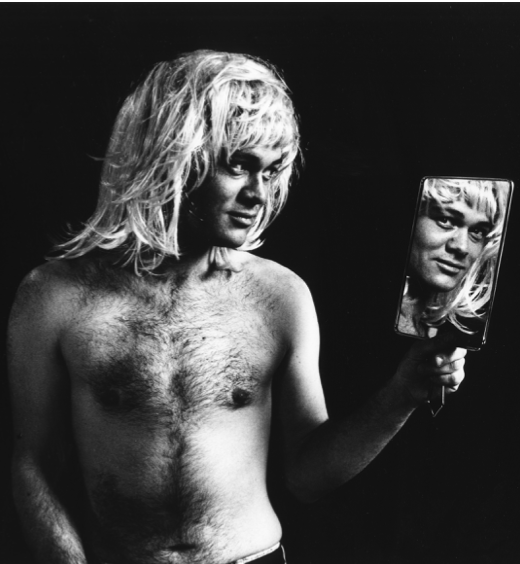
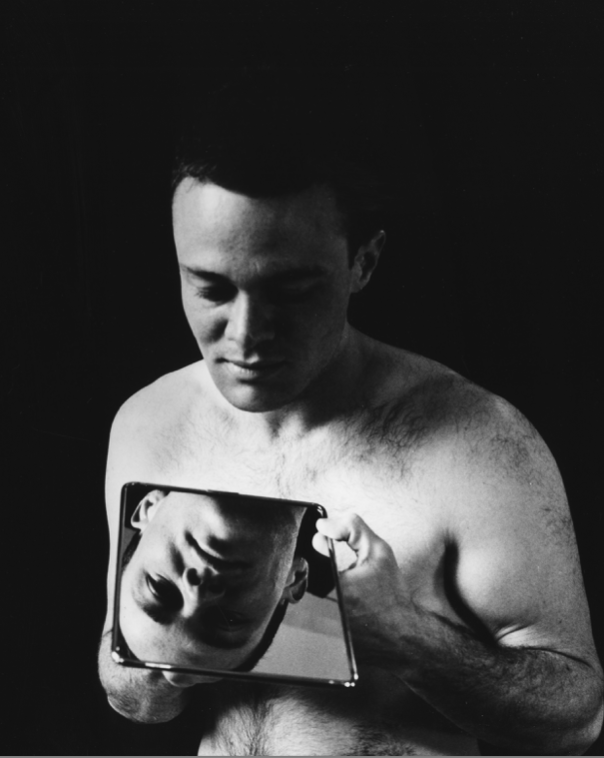
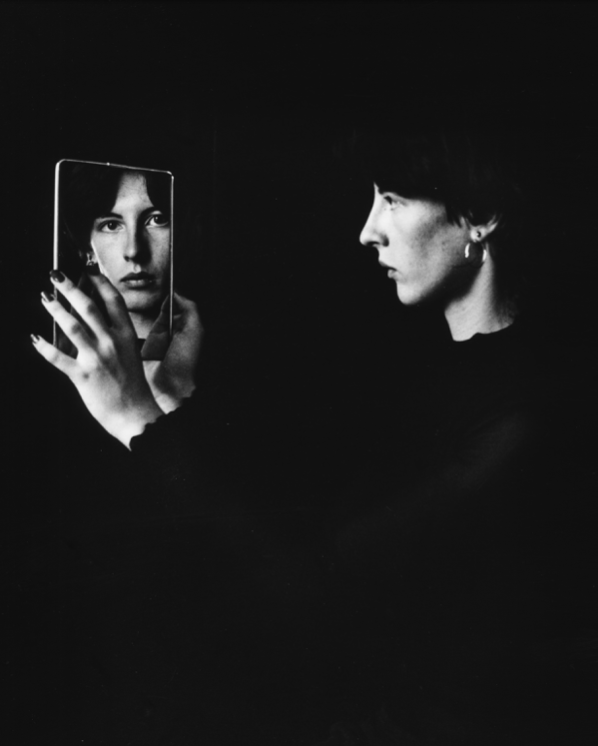
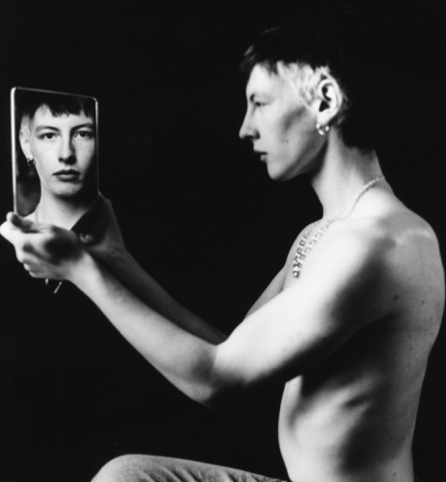
Doctor VANESSA HIBLOT is also an artist, author and photographer. She signs the portraits of Paule and Paul. All of her work can be found on her website www.vanessahiblotphotographie.com A "Sex Café" will be organized by ENIPSE on Friday, May 26 from 19 p.m. to 21 p.m. at the A CASA LECA restaurant in Ajaccio.
Prev Post
Next Post
Comments are closed, but trackbacks and pingbacks are open.
"This post is a summary of information from our information monitoring"