Read moreMadam, Sir, I would like to draw your attention to a linguistic and historical error made by a presenter of the podcast “Palestine RFI+français facile”. This podcast is broadcast in partnership with the DGLFLF, which I also contacted. https://francaisfacile.rfi.fr/fr/podcasts/les-mots-de-l-actualit%C3%A9/20230531-palestine Je vous signale une information erronée historique et linguistique diffusée par RFI au sujet du mot « Palestine » ainsi qu’au sujet de l’histoire de cette région. In the podcast broadcast by RFI, a commentator explains that the Palestinians are the Philistines. It's wrong. If the name “Palestine” is indeed mentioned by Herodotus in the 5th century BCE, it refers to the people called “Philistines” in the Hebrew texts. This name comes from the Hebrew root [pl-š] and means “invasion”, “intrusion”. The Philistines were an Indo-European people who died out around the 5th century BCE. They have nothing to do with the Arabs (Semitic people) of Palestine that the podcast is talking about. The Arab population of present-day Palestine comes from three groups: - Muslim invaders since the 135th century and their descendants - Arab immigrants attracted by the jobs created by Jews in the XNUMXth and XNUMXth centuries - local converts to Islam The name “Palestine” was given to the Kingdom of Judea in XNUMX CE by the Roman Emperor Hadrian, following the Bar-Kochba revolt. The name was chosen to humiliate the Jews, whose ancient enemies the Philistines were, in the same way Hadrian renamed Jerusalem Aelia Capitolina. In the 19th century, the term “Southern Syria” was used to refer to this province of Judea. We are also talking about the Jews and Arabs of Mandatory Palestine before the creation of the State of Israel. The 1925 Larousse entry specifies: PALESTINE: a region of Syria, between Phoenicia to the North, the Dead Sea to the South, the Mediterranean to the West, and the Syrian desert to the East, watered by the Jordan. It is a narrow strip of land, squeezed between the sea and Lebanon, and traversed by the Jordan River, which flows into the Dead Sea there. Today it is a Jewish state under the British Mandate; 770.000 inhabitants. Capital Jerusalem. The flag of Palestine as featured in the 1934 edition of Larousse is blue and white with the Magen David (Star of David) in the center. This explains why the headlines in the press narrate the events of May 1948 by giving the name Palestine a geographical meaning: the Parisian newspaper L'Intransigeant headlines "The Arabs invade Palestine"; Le Soir, a Belgian newspaper announces: "The Arab troops invade Palestine" (May 16, 1948), L'Humanité speaks of the "Jewish government of Palestine" (May 15, 1948); Paris Presse headlines: "The allied Arab forces invade Palestine" (May 16-17, 1948); Le Figaro notes: "The Arab troops cross the borders of Palestine" (May 15). Similarly, in English, on December 4, 1945, the New York Times headlined: Arabs to boycott Palestinian goods — that is, Jewish goods. Furthermore, the first Palestinian state is called Transjordan. 77% of the original territory had been taken from the future Jewish state by Great Britain, to be given to Emir Abdullah, in gratitude for his help against the Ottoman Empire during the First World War. Here is the map
The contemporary semantic mutation (designation of an entity that aspires to national and geopolitical sovereignty) appeared after 1964, following the creation of the PLO. Thus, saying that the Palestinians are the Philistines is a historical and linguistic error. The public channel RFI claiming to be in partnership with the DGLFLF contravenes all information ethics. I ask you to rectify this error. For factual and historical information, here is an article by my colleague who corrects this error. Please accept, Madam, Sir, the expression of my consideration. Yana Grinshpun MCF Language Sciences. University of Paris III-Sorbonne Nouvelle. Head of the “New Radicalities” axis within the RRA (Research Network on Racism and Anti-Semitism)
Madame, Monsieur,
I would like to draw your attention to a linguistic and historical error made by a presenter of the podcast “Palestine RFI+français facile”. This podcast is broadcast in partnership with the DGLFLF, which I also contacted.
https://francaisfacile.rfi.fr/fr/podcasts/les-mots-de-l-actualit%C3%A9/20230531-palestine
I would like to point out some historical and linguistic misinformation broadcast by RFI about the word "Palestine" and the history of this region. In the podcast broadcast by RFI, a commentator explains that the Palestinians are the Philistines. This is false. If the name "Palestine" is indeed mentioned by Herodotus in the 5th century BCE, it refers to the people called "Philistines" in the Hebrew texts. This name comes from the Hebrew root [pl-š] and means "invasion", "intrusion". The Philistines were an Indo-European people who disappeared around the 5th century BCE. They have nothing to do with the Arabs (a Semitic people) of Palestine discussed in the podcast. The Arab population of present-day Palestine comes from three groups:
-Muslim invaders since the 7th century and their descendants
-Arab immigrants attracted by jobs created by Jews in the 19th and 20th centuries
-local converts to Islam
The name “Palestine” was given to the Kingdom of Judah in 135 CE by the Roman Emperor Hadrian, following the Bar Kokhba revolt. The name was chosen to humiliate the Jews, whose ancient enemies were the Philistines, much like Hadrian renamed Jerusalem Aelia Capitolina . In the 19th century, the term “Southern Syria” was used to refer to this province of Judah. The term also refers to the Jews and Arabs of Mandatory Palestine before the establishment of the State of Israel.
The Larousse 1925 notice specifies:
PALESTINE: a region of Syria, between Phoenicia to the north, the Dead Sea to the south, the Mediterranean to the west, and the Syrian desert to the east, watered by the Jordan. It is a narrow strip of land, squeezed between the sea and Lebanon, and crossed by the Jordan, which flows into the Dead Sea. It is today a Jewish state under the mandate of England; 770.000 inhabitants. Capital Jerusalem.
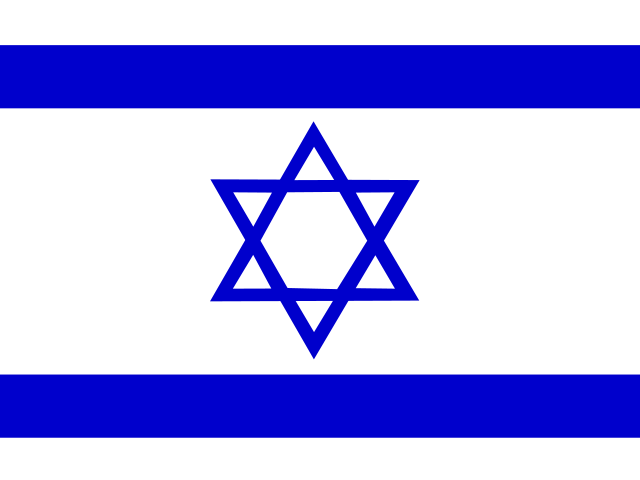
The flag of Palestine featured in the 1934 edition of the Larousse dictionary is blue and white with the Magen David (Star of David) in the center. This explains why newspaper headlines recounted the events of May 1948 using the name Palestine in a geographical sense: the Parisian newspaper L'Intransigeant headlined "Arabs invade Palestine"; Le Soir, a Belgian newspaper, announced: "Arab troops invade Palestine" ( May 16, 1948); L'Humanité spoke of the "Jewish government of Palestine" (May 15, 1948); Paris Presse headlined: "Coalition of Arab forces invade Palestine" (May 16-17, 1948); Le Figaro observed: "Arab troops cross the borders of Palestine" (May 15). Similarly, in English, on December 4, 1945, the New York Times headlined "Arabs to boycott Palestinian goods"—that is, Jewish goods.
Incidentally, the first Palestinian state was called Transjordan. 77% of the original territory had been taken from the future Jewish state by Great Britain, to be offered to Emir Abdullah, in gratitude for his help against the Ottoman Empire during the First World War.
Here is the map
The contemporary semantic mutation (designation of an entity that aspires to national and geopolitical sovereignty) appeared after 1964, following the creation of the PLO. Thus, saying that the Palestinians are the Philistines is a historical and linguistic error. The public channel RFI claiming to be in partnership with the DGLFLF contravenes all information ethics.
Please correct this error.
For factual and historical information, here is an article from my colleague that corrects this error.
Please accept, Madam, Sir, the expression of my consideration.
Yana Grinshpun
MCF Language Sciences. Paris III-Sorbonne Nouvelle University. Head of the “New Radicalities” axis within the RRA (Research Network on Racism and Anti-Semitism)
"This post is a summary of information from our information monitoring"